11 Best Bozeman Fly Fishing Dry Flies in Spring
Posted by: Alex
Date: 01/19/2026
Bozeman Fly fishing in the spring is when dry fly fishing starts to come back into the picture. Before runoff sets in, there are plenty of opportunities to fish mayflies, stoneflies, and early-season attractors on the surface again. These are our favorite spring dries to keep in the box.


Bozeman, MT Dry Fly Fishing in the Spring
Hatching insects create some of the best dry fly fishing in Montana from mid-March through early May, when the runoff season begins. Look for days with overcast skies and cool temperatures for ideal hatch conditions.
- Blue-winged olives are the most consistent spring hatch across most rivers near Bozeman. You’ll see them on the Gallatin River, Yellowstone River, and Jefferson River whenever cloudy or damp weather sticks around. On the Madison River, early stoneflies start showing up, especially on the lower river, while mayflies and caddis begin to overlap as April moves toward May.
- Skwala stoneflies show up on a few local rivers, ike the lower Gallatin and Jefferson rivers in early spring when water temperatures climb into the 40s and 50s. These bugs crawl onto rocks and banks to hatch, and trout often rise aggressively to eat them before runoff conditions arrive.
- March brown mayflies and other early mayfly species begin to emerge on the Madison and nearby waters in mid-to-late spring. These bugs are larger than BWOs and can trigger good dry fly action when fish focus on classic mayfly patterns before larger summer hatches take over.
- Caddis hatch on the iconic Bozeman, Montana, fly fishing waters between mid-April and early May. The Mother's Day Caddis Hatch is a singular fly fishing event that every serious fly angler should experience. Scores of bugs and fish feeding with reckless abandon on the surface is simply mind-blowing when the conditions line up.
- Midges are an important food source for trout and are active year-round throughout Southwest Montana. During the early spring, blanket midge hatches will cover the water surface during the mid-day hours on cool, cloudy days. The lower Madison and Yellowstone rivers, near Bozeman, are two of the premier midge dry fly fishing rivers in Montana.
Dry fly fishing in spring is usually best during the warmest part of the day. Our favorite way to fish these hatches is with a 4-weight, rather than a 5 or 6-weight, as we are often throwing smaller dries.
Below are 11 of our guides' best dry flies for Bozeman fly fishing in the spring. These patterns cover the most common spring hatches and work across multiple rivers, not just one specific spot.
11 Best Bozeman Fly Fishing Dry Flies for Spring

1. Little Olive Stone Skwala
This fly is great for spring skwala activity on the lower sections of the Gallatin River, especially in the braided sections between Belgrade and Manhattan.
It’s a great fly for covering water, and fishing tight to the banks where fish will likely be looking for bigger bugs falling into the water.
Tied with an olive or tan dubbed body, rubber legs, and a simple stonefly-style silhouette, this fly is built to float well and stay visible. Most are tied on hooks in sizes 10–14, which match the smaller stoneflies commonly seen on the Gallatin in early spring.

2. Parachute BWO
The parachute bwo is a fly that belongs in every Montana angler's spring fly box. It covers a wide range of situations on all local rivers and is reliable whenever fish start rising.
From the Gallatin to the Yellowstone and Madison Rivers, it’s a great first fly to tie on when rising fish are around.
Built with a slim olive body, parachute post, and a sparse hackle, this fly is designed to sit low on the water. Common sizes range from 16–20. The simple tie is imitative and easy to spot for both angler and trout.

3. March Brown
This is our go-to dry for targeting rising fish during a march brown hatch in the springtime, throughout Montana.
When conditions line up, this fly does a good job of matching the larger mayflies trout key in on, especially during brief but meaningful surface feeding windows.
The darker wing colors match the naturals just right and make for a great silhouette to help angler's find their fly on the water during overcast conditions when hatches are best.

4. Peacock Cluster Midge
The peacock cluster midge is not the easiest to see, but when trout are rising to very small bugs and it’s hard to tell exactly what they’re eating, this is gets the job done. It’s a great problem-solver fly and works well in slower water.
Made with peacock herl and a simple thread base, this fly relies on natural sheen rather than bulk.
It’s most commonly fished in sizes 16-18 around Bozeman. The minimal materials allow it to match very small insects while still being visible enough to track during subtle surface feeding.
5. Stimulator
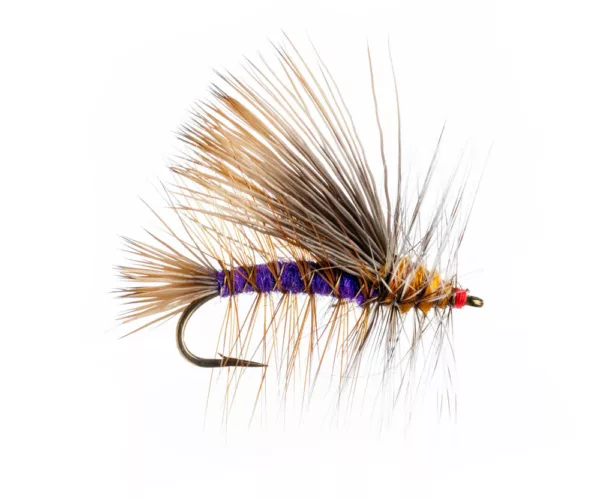
The stimulator is a great spring dry for the Gallatin, Yellowstone, and Upper Madison Rivers when early stonefly activity begins.
It’s easy to see, floats well, and works nicely as a searching pattern during warmer afternoons when trout are willing to move for a surface fly.
Tied with a buoyant dubbed body, palmered hackle, and a hair wing, this fly is designed to stay afloat in faster water. Sizes 8–14 are common for spring fishing. The materials give it durability and floatation, making it useful when early stoneflies begin showing.

6. Royal Wulff
The all-time classic dry fly that works as well today as it did back in the 1930's when Lee Wulff's creation first gained popularity. Highly visible and durable, the Royal Wulff is an excellent choice when fishing during a heavy mayfly or caddis hatch on the Bozeman fly fishing waters.
Our guides started using the Royal Wulff during the Mother's Day Caddis Hatch back in the early 2000's as an "indicator" fly when the bugs are thick on the water. We tie a small caddis dry off the bend of the Royal Wulff on about 2' of tippet. This technique makes it easier to track the more natural imitation and detect strikes during the chaos of emergence and egg laying.
As it turns out, fish take the wulff with regularity when the hatch is heavy! It's always a good idea to have a few of these essential dry flies in your box, from size 12-16.

7. Micro Chubby
The micro chubby is an excellent early-season dry for running light dry-dropper setups. It floats well, stays visible, and still draws occasional surface eats.
It’s a practical choice when you want to cover water efficiently while keeping a small nymph in the mix below.
Tied with foam, rubber legs, and synthetic wing material, this fly is all about floatation. Commonly fished in sizes 12–16, it’s easy to see and supports a dropper well. The materials make it durable and effective for early-season dry-dropper setups.

8. Parachute Adams
This is one of the most reliable dry flies to fish in the spring because it works great as an imitation during any of the spring mayfly hatches in Montana.
Tie this one on during a March Brown or blue-winged olive hatch on the Gallatin, Madison, Yellowstone, or Jefferson rivers when trout are selectively feeding with rhythmical rises.
Tied with a gray dubbed body, parachute-style white post, and grizzly hackle, this fly floats well and stays visible in mixed light. It’s commonly fished on size 14–18 hooks around Bozeman and pairs well with longer leaders and lighter tippet during spring conditions.

9. Griffiths Gnat
This is a go-to pattern in the spring when trout are rising to very small bugs and larger dries aren’t getting looks.
It’s especially effective during midge activity on the Gallatin, Lower Madison, and spring creeks when fish are feeding quietly in softer water.
Tied with peacock herl and grizzly hackle wrapped tightly through the body, this fly imitates clusters of midges on the surface. It’s most commonly fished in sizes 18–22 around Bozeman and works best with light tippet and careful presentations.

10. Peacock Elk Hair Caddis
Fish this dark bodied cdry fly classic once the legendary Mother's Day Caddis Hatch kicks into gear on the lower Madison and Yellowstone rivers between mid-April and early May.
Highly bouyant and visible, our guides usually fish this in sizes 12 - 16. Go larger when the bugs are on the water in big numbers and change up to a smaller size when targeting a slow-riser on the edge when bugs are more scarce.
Add a small, beaded dropper like a soft hackle peacock or tung dart when the trout are keying into the pupa stage - you can tell this is going on by watching the riseforms from feeding trout. If you are seeing lots of "splashy" takes, that's the cue to start fishing subsurface during a caddis hatch

11. X Caddis
This is one of the most reliable dry flies to fish in the spring when caddis activity starts to show on rivers around Bozeman.
It works well on the Gallatin, Madison, and Yellowstone when fish are feeding just below the surface and keying on emerging insects rather than fully hatched adults.
Tied with a sparse body, trailing shuck, and low-riding profile, this fly imitates an emerging caddis very well. It’s most commonly fished in sizes 14–18 and pairs nicely with lighter tippet, making it a strong choice during early-season hatches and softer spring conditions.
Bozeman Fly Fishing Guide Pro Tip
In the spring, checking the Montana weather before you head out matters more than anything else. Afternoons in the 40s and 50s with some cloud cover give you the best chance of running early-season bugs, and paying attention to wind is just as important.
In the spring, pay attention to how rainbow and brown trout position themselves as water temperatures change. On smaller rivers and creeks, fish that are willing to eat stonefly attractors or larger dries are often tight to the banks, especially in braided sections or softer edges. Being comfortable casting close to the bank is one of the easiest ways to move bigger fish this time of year.
As hatches get smaller, lighter tippet becomes more important. Fishing a 4-weight in the spring helps protect light tippet when you’re throwing size 14-18 flies, giving you better drifts and fewer break-offs when fish finally eat.