Only Fins - Episode 6
Join Toby and Alex as they talk about Bozeman fly fishing during the summer heat with FFGS fly fishing guide Kaden Kelly. They run through recent fishing and give some insight into what goes through a guide's mind when fishing gets tough.
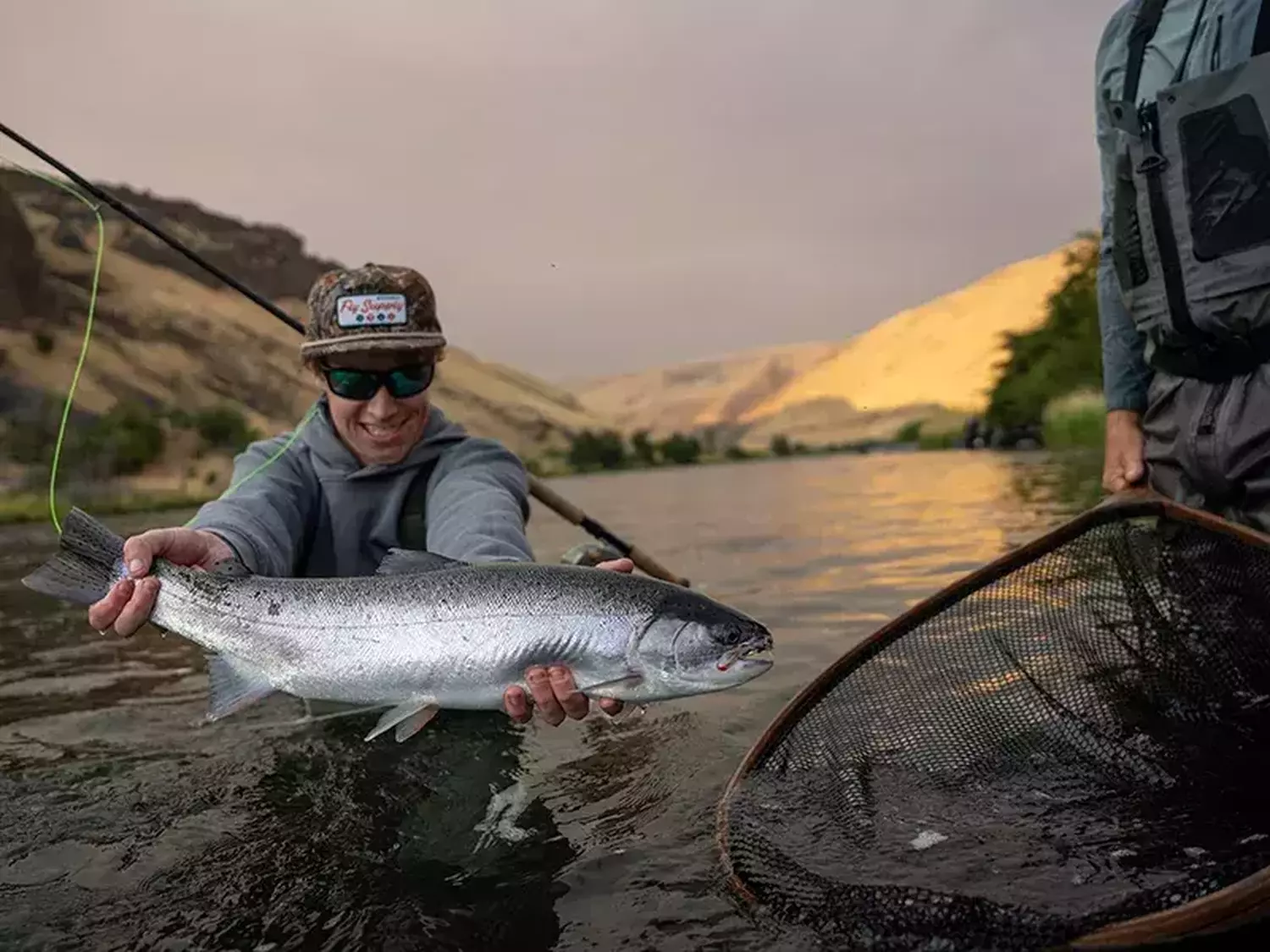
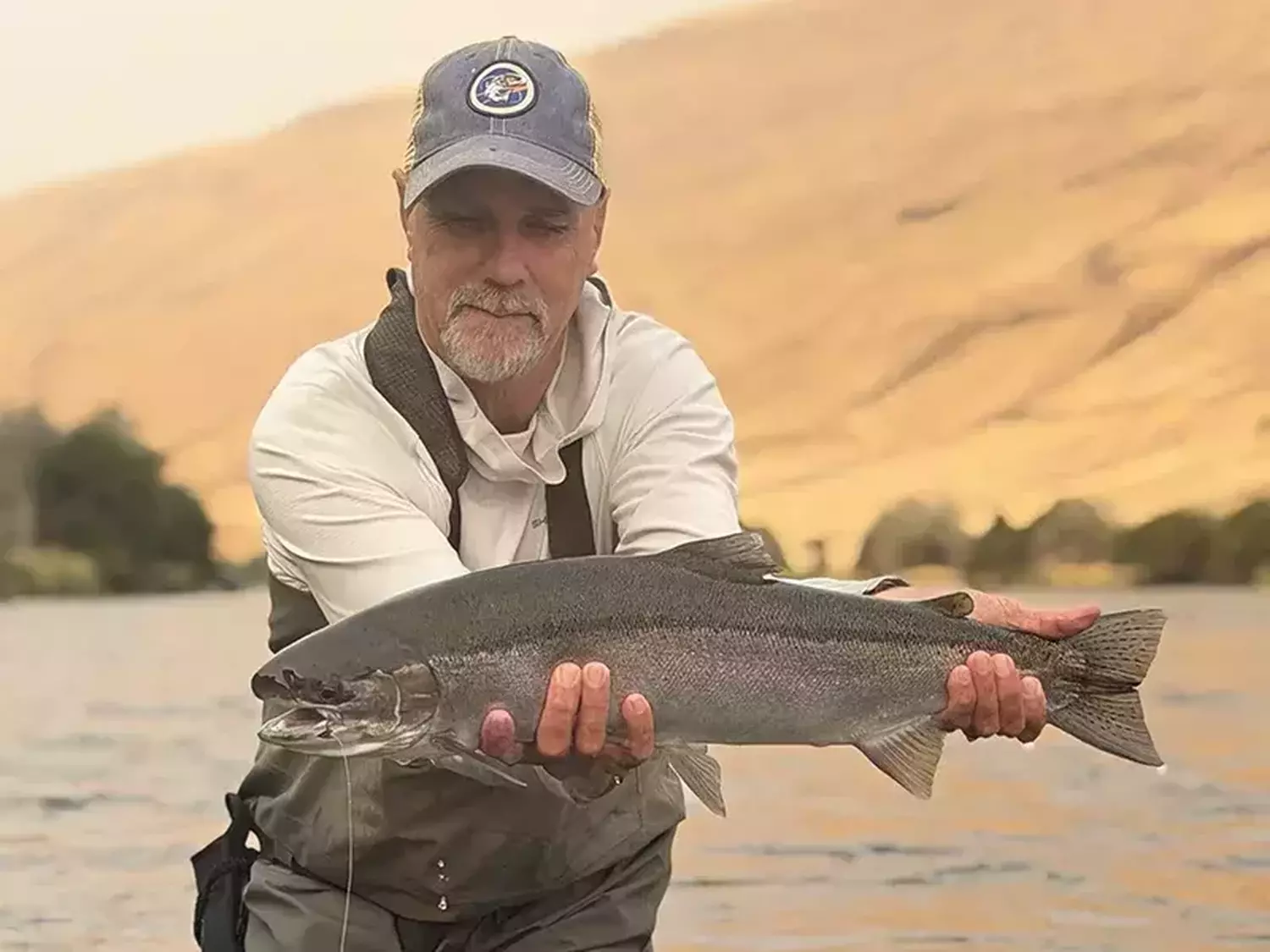
Alex and Toby then dive into a discussion around an early summer steelhead trip to Oregon's Deschutes River in a way that only a father and son can get away with!
CLICK THE PLAY BUTTON BELOW TO LISTEN
The Only Fins podcast features discussions on all things fly fishing, from the uniquely different perspectives of Alex and Toby Swank. Together with a team of Bozeman fly fishing guides, this father-and-son duo is Fins and Feathers Guide Service. Founded in 2000 as a fly shop and Montana fly-fishing outfitter, they sold the fly shop in 2022 to focus solely on sharing their passion for fly fishing through outfitting on Montana's wild trout waters.
ONLY FINS PODCAST
Late-Summer Fishing and Steelhead on the Lower Deschutes
Speakers:
Alex Swank
Toby Swank
Kaden Kelley
[Music]
ALEX: Welcome back to the Only Fins Podcast. I’m Alex Swank. Today I’m joined by my dad, Toby Swank of Fins and Feathers Guide Service, and one of our guides, Kaden Kelley.
I first met Kaden six or seven years ago, when he was working at Fins and Feathers and we still had the fly shop. It’s been a lot of fun fishing with you over the years and watching you grow as a guide. You’ve become a valuable member of our team. What has the past month looked like for you on our local rivers?
KADEN: The last couple of weeks have been challenging. It’s late in the summer, it’s been hot and smoky, and the Yellowstone was out of commission for a while after a big mud plug came through. The water was off-color, so the Upper Madison became one of the only games in town.
Flows have also been all over the place. When the river rises, trout become unsettled. One day we find them in the middle, and the next day they’re pushed against the banks. A fly might be great one day and get ignored the next. We’ve been changing bugs and trying to figure out where the fish are holding as conditions change.
We’re still having fun, though. It’s hopper season, which keeps everyone entertained. Our clients have been great about working through the tougher fishing with us. It often seems that as soon as we find the hot fly, the fish change what they’re doing.
TOBY: We’ll often start by nymphing in the morning. Once we catch a few fish, we switch to a hopper-dropper and hope they’ll start looking up. What always amazes me is how often we take the small fly that was working on the nymph rig, put it below the hopper, and suddenly the fish stop eating it.
You wonder whether they wanted it down on the bottom or rolling around differently. I’ll go back to the nymph rig, catch a few more, and then switch again. By then, they invariably start eating the hopper. That makes you wonder whether you should have left the hopper on all day. Do you run into those situations where it becomes really confusing?
KADEN: Absolutely. As a guide, you want to keep changing flies until you solve the puzzle. Sometimes I think I change too much. This time of year, if you have confidence in a hopper and leave it on long enough, you’ll probably run into the right fish eventually.
Lately I’ve tried to choose a fly I trust and give it a good college try. I let it fish for a while before pulling over and changing everything again.
TOBY: What frustrates me is when you think you have it figured out, then you feed everyone turkey sandwiches at lunch. They get tired, their good drifts disappear, and suddenly you’re wondering whether it’s the fish, the drag or the time of day.
Right about then, a twenty-two-inch brown trout slowly rises behind the hopper, follows it downstream and eats it—and somebody pulls the fly away. That happens several times a week.
KADEN: It does, but it’s fun. It gets your head back in the game. You stop worrying about which fly to use and start working with the clients again: getting the drift right and keeping the fly in the water.
TOBY: Those are the things that come up every day. The more time you spend on the water, the more comfortable you become making midday changes in flies, techniques and strategies. There’s a lot involved in putting together a great day—helping guests have fun, catching fish and teaching along the way.
Kaden, that’s something you’ve been good at since you started. A lot of it probably comes from growing up in Bozeman. Your dad was a fishing guide, and I knew him when he was involved in the fly-fishing world years ago. How did that shape you?
KADEN: I was introduced to fly fishing as soon as I could stand up. I grew up in the front of my dad’s boat, learning how everything worked. We joke that I inherited the defective gene.
When I started working in the fly shop, I was still in high school, and it was the perfect job for me. I saw an opportunity to guide because I had already shared fly fishing with many of my friends. I enjoyed teaching people and watching them catch their first fish.
My first guiding season was a slow burn, but by the second year I was on the water nearly every day and gaining confidence. This year it feels as though everything has come together. I’m having a lot of fun with my clients, and many of them are returning to fish with me again.
TOBY: As an outfitter, I’ve always been cautious about bringing new guides into the program. There’s liability, risk and the reputation of the business to consider. I felt good about you from day one. You began a little later in the season, so we didn’t throw you directly into the fire. We put you in good situations, and you learned and improved quickly.
You’ve always had the natural ability to be exceptionally fishy, but you also understand that the trip is about the guests. There’s always an opportunity to create a great day—whether that means catching fish, teaching a reach mend, explaining insect activity or discussing conservation.
People take guided trips because they want to have a good time. They want to catch fish, learn and have new experiences, but ultimately they want to enjoy themselves. That’s our driving force. The more we travel and fish with guides in other places, the more important that becomes.
THE LOWER DESCHUTES
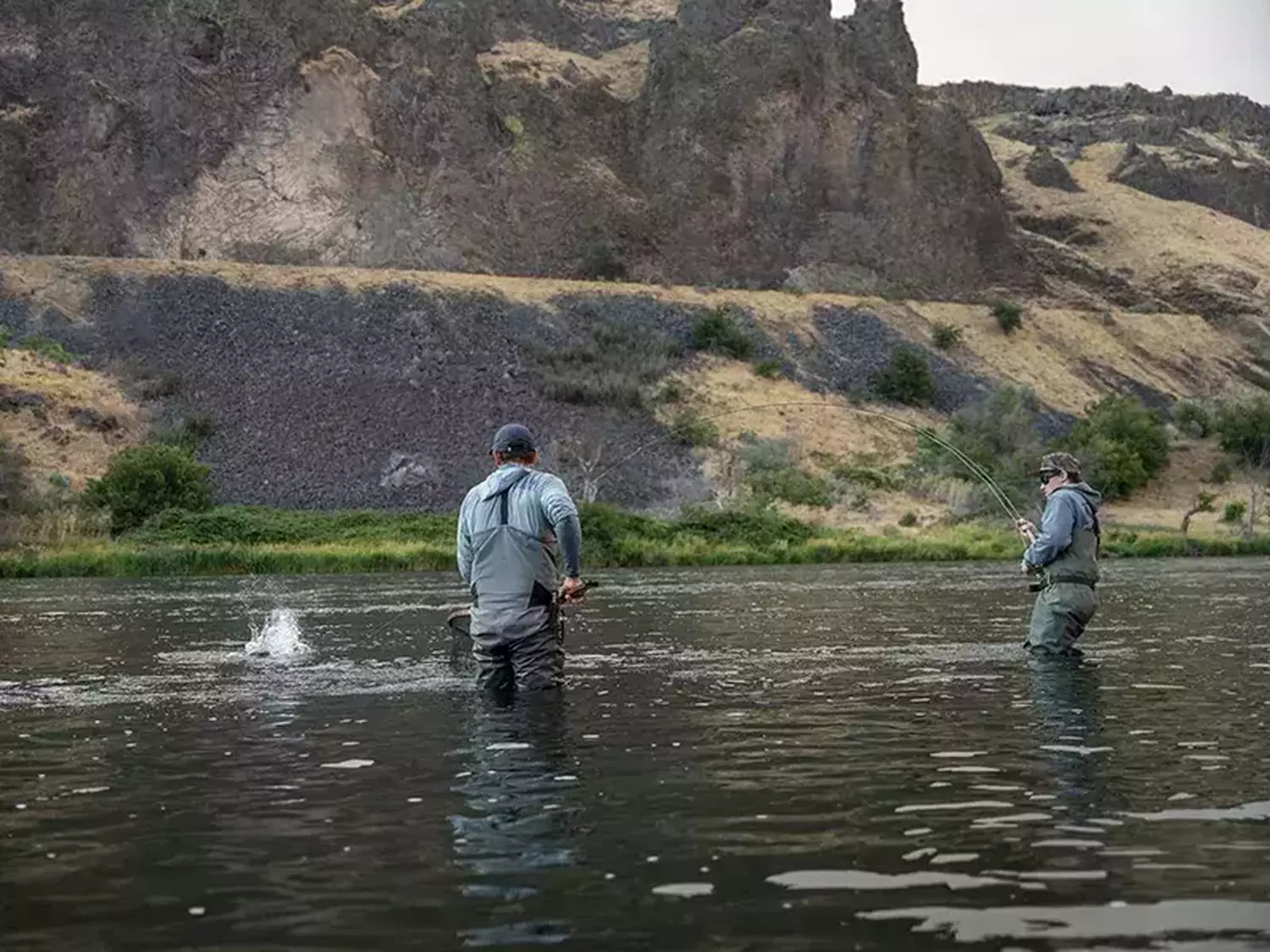
ALEX: We just returned from an early-season summer steelhead trip on the Lower Deschutes in mid-August.
TOBY: We did, and it was a lot of fun.
ALEX: The fishing wasn’t particularly good.
TOBY: No, it wasn’t.
ALEX: That probably had something to do with the fact that there weren’t many fish in the river yet. It was challenging, but spey fishing with a thirteen-foot rod was also completely new to me.
TOBY: I picked it up pretty quickly, didn’t I?
ALEX: Naturally, I’d say. During one of the later sessions, I was fishing with Barrett, one of our guides, and you were in a pool below us. He looked down and said, “Your dad has to be exhausted. He puts his whole body into that cast.”
TOBY: He was right. I was exhausted after the first evening. I lay in my cot that night with my arm on fire, thinking about all the spey-casting and trout-spey clinics I hosted during the fly-shop years. I never paid attention to a single thing the experts said.
ALEX: Were you better at the Snap-T or the double spey by the end?
TOBY: I was pretty good at the overhand cast.
ALEX: The double haul?
TOBY: I could double haul a thirteen-foot rod pretty well. By the last morning, I finally figured something out. I don’t know whether it was a single spey, a double spey, a Snap-T or just a roll cast, but I could finally send the line out there. It’s a great feeling when it works because it’s so difficult to do.
ALEX: The fishing itself was more challenging than we expected. Steelhead fishing is known as freshwater permit fishing—technical fishing for the fish of a thousand casts.
TOBY: You don’t just walk down to the river and catch them. They don’t behave like ordinary rainbow trout.
ALEX: Especially when there aren’t many fish in the river. It felt as though you could fish a piece of water perfectly, but the fish were either there or they weren’t.
TOBY: And they usually weren’t.
ALEX: At least you had plenty of time to practice your Snap-T.
TOBY: Plenty of time to wear out my shoulder.
ALEX: I thought the trip was fantastic.
TOBY: The biggest challenge was sharing a tent with you.
ALEX: Aside from that.
TOBY: I was also trying to avoid the mess outside the tent after your first night.
ALEX: That may have been my biggest challenge too.
TOBY: It was a satisfying moment as a father when the guides woke us before dawn on the first morning and neither of my children showed up. I had already hooked two steelhead while they were still asleep in their tents across the river.
ALEX: Starting a fishing trip a little too enthusiastically has become something of a ritual. Matty participated this time too.
I was also warned repeatedly about rattlesnakes, but I never saw one. We were all concerned enough that you bought knee-high guards that looked like soccer shin guards. Matty didn’t seem worried about snakes. He was focused on his Snap-T and on fishing the beautiful married-wing flies he had tied.
TOBY: The disappointing part for him was that we were using small wet flies. He had tied these enormous Atlantic salmon-style flies that were beautiful but impractical for the situation.
ALEX: Whenever we travel, he brings a collection of flies and shows them to the guides. They’re usually impressed.
TOBY: They were impressed this time too. They just weren’t going to fish them.
ALEX: Have you ever caught a wild steelhead?
TOBY: I hear the wild ones don’t fight as hard.
ALEX: Matty may be one of the only people in the country to catch a Pacific steelhead and a Lake Erie “steelhead” in the same month.
TOBY: Steelhead in quotation marks when we’re talking about the Rocky River.
ALEX: Still, in one of the toughest Augusts in recent anadromous-fish history, Matty got it done.
TOBY: My steelhead was bigger than both of yours.
ALEX: I saw the truck it came out of.
LEARNING A NEW RIVER
ALEX: Pound for pound, those fish can fight. It was electric to finally hook one. I didn’t connect until the end of the second day.
We fished in sessions—from sunrise until noon, followed by a siesta, then another session from late afternoon until dark. After a full morning and evening without touching a fish, I started questioning everything.
TOBY: You skipped part of the first morning.
ALEX: I arrived right when Toby hooked his first fish and watched him catch his second. In theory, I showed up when the fishing became good. I was just on the wrong side of the river.
TOBY: I loved the trip, though. There weren’t many fish in the river, much of the West Coast was on fire, we were engulfed in smoke and it was extremely hot. But all of that was outweighed by the beauty of the place, the chance to fish with everyone and the experience of learning something new.The river was amazing. I loved the rapids between the launch and camp.
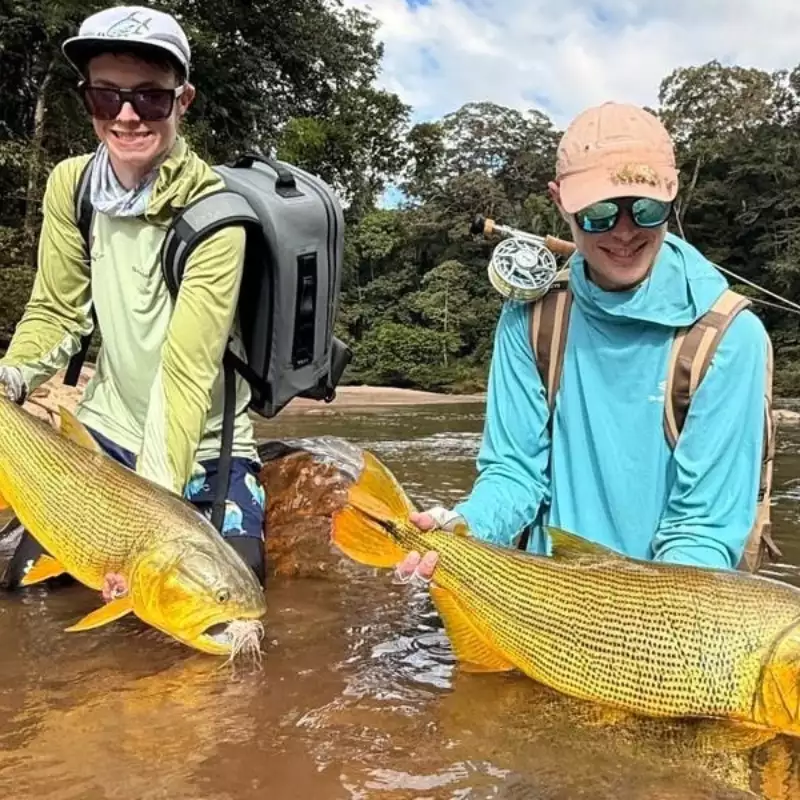
ALEX: It reminded us of Brazil, only with far more water.
TOBY: I had never seen a boat with a two-hundred-fifty-horsepower tiller motor. It was unbelievable. I wanted them to let me drive it.
ALEX: They were never going to let you drive it.
TOBY: I asked many times. On the last day, they offered to let me idle up a run. I wanted to run it through the rapids, which was not an option.
ALEX: Those guides knew the river because they spend weeks and months out there. When you swing a run for an hour, you have time to study the water—how it moves, where a fish might hold and how you want to approach it. Spey fishing gives you a completely different tool set from single-handed fishing and changes how you cover water.
It was eye-opening and stressful. Before I hooked that first fish, I spent hours wondering whether I was doing everything wrong. I didn’t know whether it was my technique, fly selection or the water I had chosen. I barely knew how to put the fly where I wanted it. When a cast landed somewhere near the right zone, I considered that a win.
My favorite part was the morning sessions. We fished directly in front of camp, close enough that everyone knew when somebody hooked up. It would be quiet, then you’d hear someone upstream and a voice would come across the radio. I kept thinking it was about to happen to me.
TOBY: The river itself was spectacular: the current, rock gardens, structure and holding water. We stood there in the darkness as the light rose over the surrounding mountains. The smoke intensified the gold in the morning light. It was beautiful.
TOBY: What was your favorite part of the trip?
ALEX: Catching my first steelhead, obviously.
TOBY: Are you going to count it?
ALEX: Absolutely. I usually catch the biggest fish on every trip—although I didn’t this time.
TOBY: Who did?
ALEX: Neil. I was with him when he caught it at a spot called the Massage Parlor.
On the first morning, our groups were a little disorganized. Toby and Matty went one direction, while I went with Will and his dad, Neil. We swung several runs before Barrett pulled over at a beach he called the Massage Parlor. It was a one-person spot, and he asked who wanted to fish it.
My head was hurting, so I offered it to Will. Will suggested that his dad try. Neil had barely started learning what to do, but he stepped into the run and made a few casts.
When a steelhead takes a swung fly, you don’t react immediately. You wait for the fish to turn with the fly before setting the hook. If you strike at the first bump, you pull it from the fish’s mouth. That’s what Neil did that morning.
TOBY: On the last session of the last day, Neil returned to the Massage Parlor and hooked a beautiful fish. It was a perfect ending. Everyone caught a steelhead, and nobody got completely burned on a first steelhead trip. Neil’s fish was about thirty-five inches. Given the conditions and everyone’s attitude, the trip ended perfectly. It could have been a disaster if we had brought bad attitudes, but the guides were excellent and everyone had fun.
Watching Neil land that fish was especially rewarding. The water became deep below the sandbar, and he had to work down the bank with Curtis holding him. I followed with the net, trying to keep everyone balanced. I filled my waders a couple of times, but we finally reached the tailout and landed the fish.
Neil was overwhelmed with joy. I don’t think he had any idea what he was getting into when we started the trip.
ALEX: We’re fortunate to fish with many good guides, but Barrett Ames and Curtis Cizek were exceptional people. If you want to fish the Lower Deschutes, those are two stellar guides.
WHAT GUIDING IS REALLY ABOUT
ALEX: On the last day, Curtis asked whether I remembered how bad my spey casting had been on the first evening and how much he had taught me. Then I realized that I had to return home and do the same thing for someone else the next morning.
TOBY: That’s what fishing guides do everywhere—whether you’re in Brazil, Mexico, Belize or Montana. It’s part of being a guide. The important thing is how you embrace the process and use it to build connections with clients, friends and family. Sharing the sport is what makes fly fishing so special.
ALEX: Curtis should feel that he earned a win with me. I was terrible during the first session, but by the last one I was doing all right.
No matter where we go or whom we fish with, there’s pressure to perform. You don’t want to ruin a shot when everyone is watching. Working through that pressure with another person helps create a connection. Whether you’re helping someone catch a first fish or teaching a cast, it’s one of the best parts of the sport.
TOBY: That’s why I’ve always loved guiding. I love fishing and the connection between an angler and a fish, but the most rewarding part has been progressing with people over time.
Someone may begin as an experienced angler, an average angler or a complete beginner. I’ve done my job well if that person finishes the trip better at something—whether it’s mending, selling a fish on a fly or understanding insects. The goal is to help people discover the same enjoyment in fishing that I have.
LOOKING TOWARD FALL IN MONTANA
TOBY: When we returned from Oregon, it was still hot and smoky in Montana. The air quality had become so bad that some guides canceled trips while we were away. I had never seen that happen in all my years here.
I was worried conditions would be miserable when we returned, but they improved quickly. The August singularity came through—a weather pattern that often brings a cold front to the northern Rockies around the middle of the month. It pushed out much of the smoke, brought moisture and turned things around.
Going forward, conditions should continue to improve. The weather is cooling, the fishing is ramping up, and each of our local rivers should get better as we move into fall.
Brown trout are already beginning to move out of the middle of the river. We’ve started catching a few in riffles and faster water, which is one of the first signs that fall is in the air.
ALEX: For this week’s “What Didn’t They Tell You in the Fly Shop?”
TOBY: They’ll never tell you about the significance of the August singularity. It is the single most important thing to remember when planning a Montana fly-fishing trip in August: plan it for after the singularity.
ALEX: Thank you for listening to the Only Fins Podcast. Find us online at flyfishingbozeman.com, on Instagram at @flyfishingbozeman, or email us at info@flyfishingbozeman.com. Thanks.
[Music]
From The Montana Fly Fishing Blog

Category: Bozeman Fly Fishing Trip Planning
When Is the Best Time to Fly Fish in Montana? A Complete Seasonal Guide
Post Date: 11/19/2025
Plan your Bozeman fly fishing trip around the best times of the year when water conditions, hatches, and trout activity are at their peaks to get the most out of...
Read Article